
Bilateral cervical ribs (Eve’s ribs) causing thoracic outlet syndrome: A case report - Presented at EUSEM'25, Vienna
Darsa P Wilson, Himanshu Gul Mirani
Case Presentation:
A 48-year-old male construction worker presented with progressive right arm tightness and intermittent pain exacerbated during occupational activities. He reported persistent right-sided neck discomfort for several weeks, initially attributed to poor sleeping posture and treated with NSAIDs by his primary care physician. Clinical examination revealed pain on right shoulder extension and a positive Adson's test, suggesting thoracic outlet obstruction. Neurological examination was otherwise unremarkable, with no evidence of muscle atrophy, limb swelling, or collateral venous patterns. Laboratory investigations showed normal inflammatory markers and negative D-dimer.
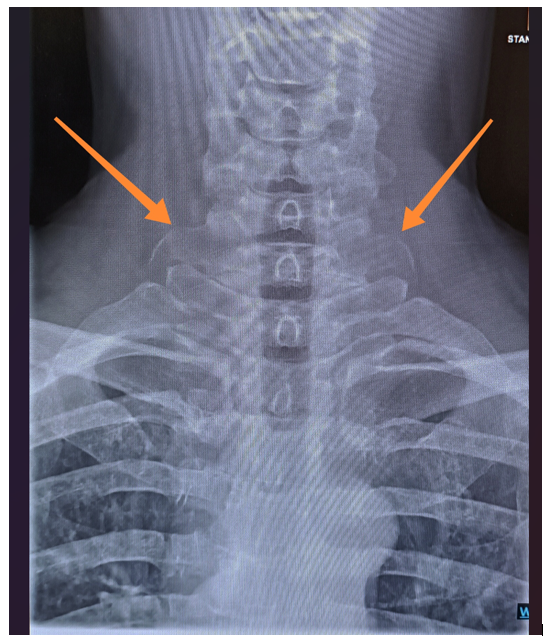
Bilateral Cervical Ribs
Management and Outcome:
Cervical spine radiography revealed bilateral cervical ribs with more prominent development on the right side. This anatomical variant directly corresponded with the patient's symptomatology, confirming the diagnosis of neurogenic thoracic outlet syndrome (TOS). The cervical ribs created a narrowed thoracic outlet, resulting in neurovascular compression during certain movements and activities.
Key Learning Points:
This case emphasizes the clinical significance of cervical ribs as structural contributors to TOS in patients presenting with upper extremity pain without obvious trauma. Though cervical ribs occur more commonly in females and are typically asymptomatic, this male patient's occupational demands likely precipitated symptom development. The case highlights the importance of including TOS in the differential diagnosis of upper limb pain, particularly in physically demanding occupations. Early recognition facilitated prompt conservative management through analgesics and physical therapy, with appropriate specialist referral to prevent long-term complications such as chronic pain, neurological deficits, or vascular compromise. This multidisciplinary approach represents the optimal management strategy for this uncommon but potentially debilitating condition.